
Checking Criminal History in Lubbock County
Begin with the question the record must answer. A filed felony or misdemeanor belongs in Lubbock County Public Access. A recent custody event belongs in the sheriff's roster. A public statewide conviction or deferred-adjudication search belongs at Texas DPS. For your own identity-matched Texas record, use fingerprints through FAST. These channels overlap, but none replaces the others.
Collect a full name, date of birth, likely filing year, and any known case, booking, or SID number. Name variants matter. The county portal and DPS also serve different scopes, so a result in one and no result in the other is not a contradiction by itself.
- Choose a case, booking, police report, statewide record, warrant, or self-review channel.
- Search with the most exact name, date, and reference number available.
- Check the court level and match the person before reading the result.
- Compare booking allegations with the later clerk disposition.
- Ask the custodian for a copy or use fingerprints when an official self-review is needed.
Lubbock County Criminal Case Portal
The county's court-access instructions explain an important split: a free validated account provides remote index facts, while courthouse terminals can display documents that do not appear as images online.

The remote account shows general case details, parties, attorneys, and schedules for eligible District Clerk and County Clerk matters. Email validation must occur within three days. Selecting Home bypasses prompts meant for elevated access. Justice of the Peace coverage is not promised, so precinct cases still require contact with the correct JP.
| Portal control | Use | Access note |
|---|---|---|
| Smart Search | Name or case-number-style criterion | One criterion starts a search |
| Advanced filters | Court, status, date, or case type | Choices can vary by account role |
| Register / Log In | Creates remote public access | Free account and email validation |
| Courthouse terminal | Displays available filed documents | Use the custodian for copies |
Texas Official Background Checks
The Texas Department of Public Safety Crime Records Division operates the Computerized Criminal History system. Its Public Criminal History Conviction Search is a name-based public product. It chiefly exposes convictions and deferred adjudications made public by law. It is not the same as a person's full, fingerprint-matched Texas record.
DPS starts with narrow name combinations and widens them without a second charge. A full birth date helps narrow matches. Public users should save the returned material they need because search history and result content have different retention rules. The official name-based path is useful for statewide public data, while local filed cases remain with the Lubbock County clerks.
| Official product | Base fee | What it answers |
|---|---|---|
| DPS online name search | $1 per initial search | Public Texas conviction and deferred data |
| DPS offline name check | $10 | Official public name check |
| DPS FAST personal review | $25 total | Your fingerprint-matched Texas CHRI |
| FBI direct summary | $18 | Your FBI Identity History Summary |
Lubbock County DPS Record Limits
The DPS name-search instructions show why the one-credit query should not be called a complete rap sheet.
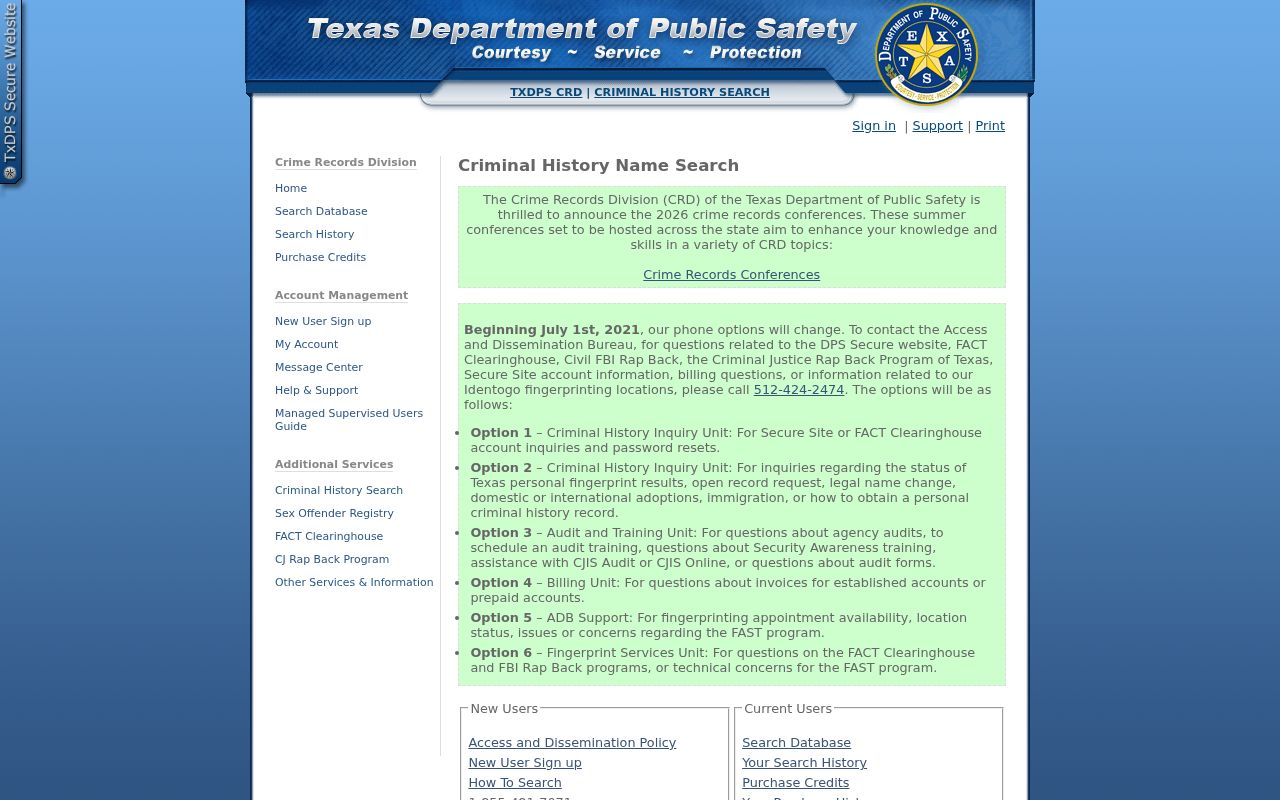
A secondary name may return a record under a different primary name. Fingerprints, not similar spellings, establish identity. A county case can also be pending, dismissed, acquitted, archived, or outside public CCH release even when the clerk has a file.
The DPS public Crime Records portal is the official entry for public conviction searches and other public Crime Records services.
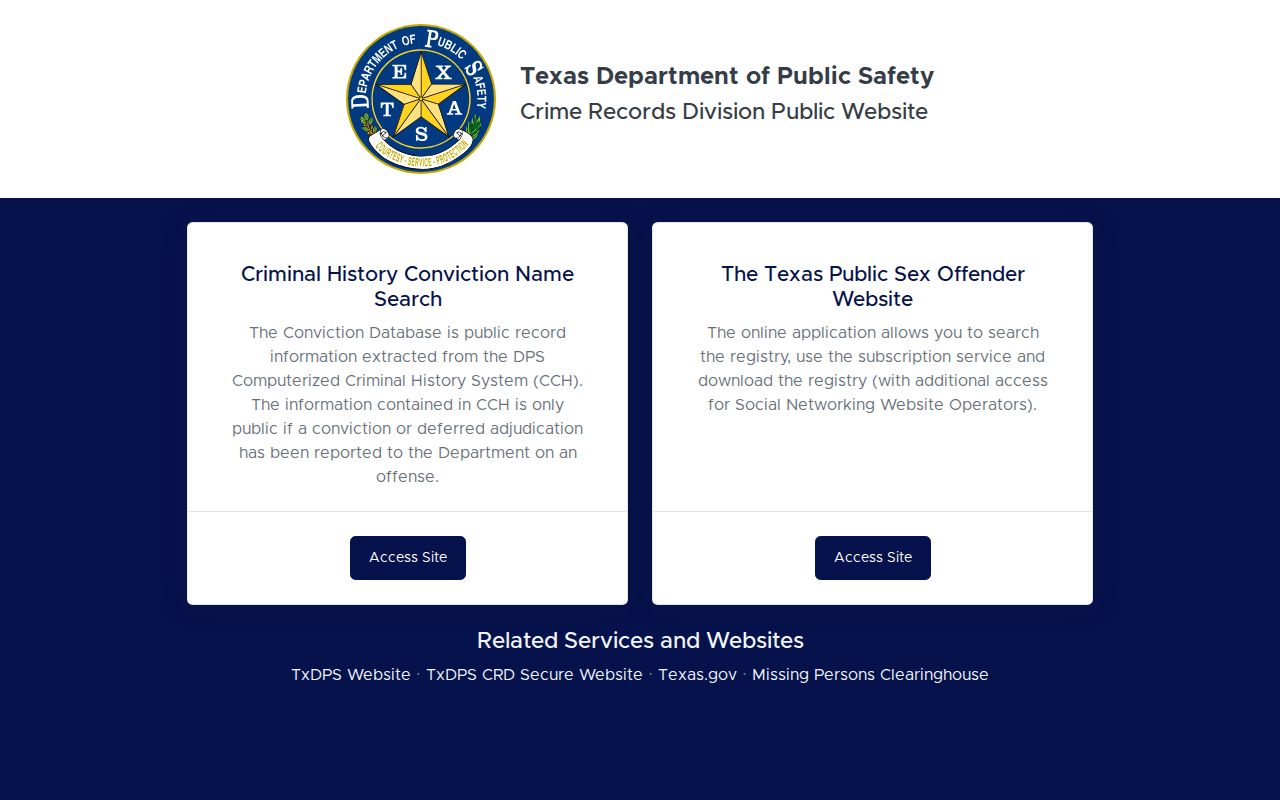
Read each result as statewide public CCH, not as a live Lubbock County jail list or a substitute for the filed court case.
Criminal Record Types
Lubbock County agencies create records at different moments. Police and deputies write incident or arrest reports. The Detention Center creates a booking record. A prosecutor chooses the filed charge, and the proper clerk keeps the case. DPS then joins reportable events into a person-centered CCH cycle when agencies submit fingerprints and dispositions.
- Arrest and booking: allegations, intake, bonds, custody, and release.
- Court case: filed charges, settings, motions, plea, judgment, and sentence.
- Warrant: a judge's process, with service tracked by law enforcement.
- Supervision: county community supervision or state parole records.
- Registry: offense-specific public registration data, not every conviction.
A police report must be requested from the agency that wrote it. Lubbock PD, the sheriff, Wolfforth PD, Slaton PD, DPS, constables, and campus police do not feed one universal public report cabinet.
Review Your Lubbock County Record
For an identity-matched review of your own Texas history, enroll through FAST service code 11FT12. The vendor displays current Lubbock-area sites only after the location search, so a fixed commercial address list should not be trusted.
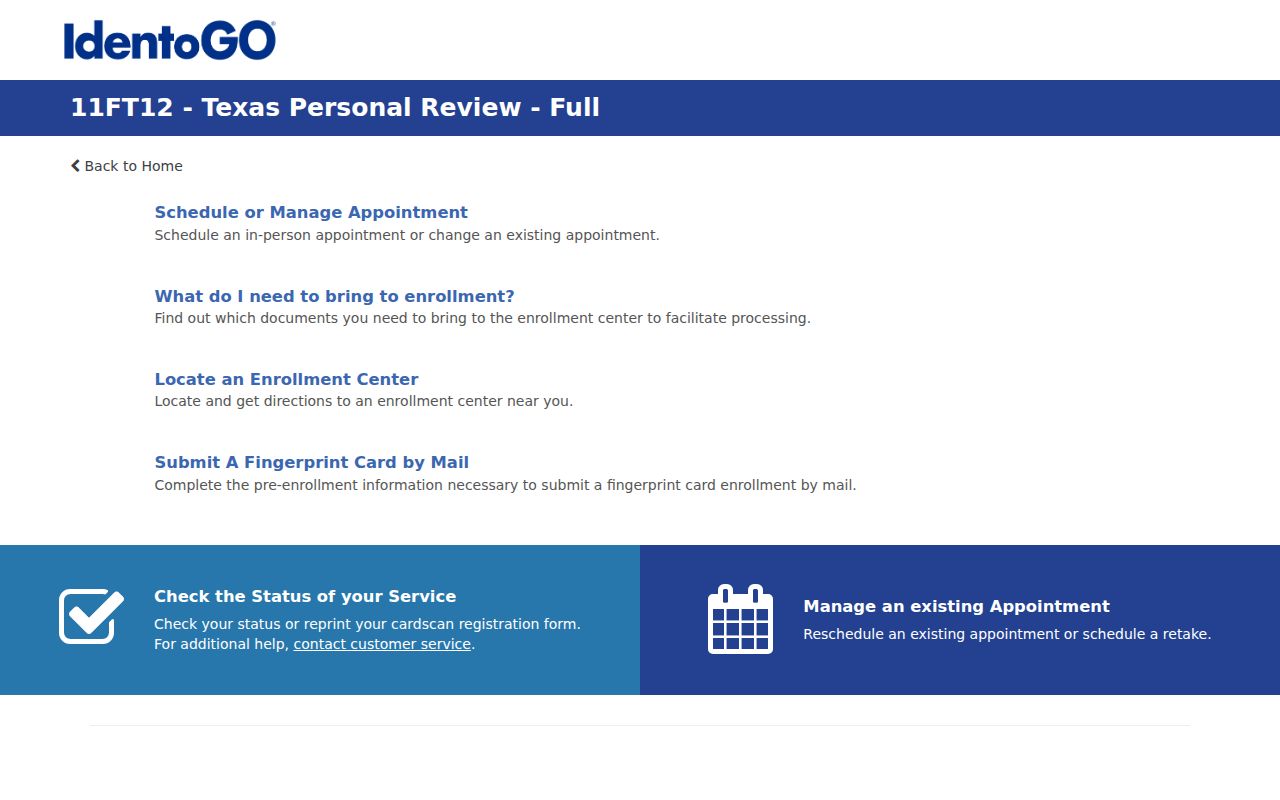
Bring accepted identification and keep the enrollment receipt. DPS lists a $10 fingerprint charge plus $15 for CHRI. It estimates about ten business days once the submission arrives. If data are inaccurate or incomplete, the DPS error-resolution process generally needs support from the agency that sent the arrest or disposition.
Note: A fingerprint self-review resolves identity more reliably than a public name search, especially when names or birth dates are similar.
Inside a Lubbock County Criminal Record
A record's fields depend on its custodian. A booking file is custody-centered. A clerk file is case-centered. The DPS CCH cycle is person-centered and may carry a Texas SID, an FBI number, or a tracking control number that connects arrest, prosecution, disposition, and custody reports.
| Name and identifiers | Names, birth data, agency numbers, and identity links allowed for that product. |
|---|---|
| Arrest and booking | Agency, date, allegations, booking number, bonds, and custody status. |
| Filed charge | Complaint, information, or indictment and cited offense. |
| Docket and disposition | Settings, events, plea, dismissal, acquittal, or conviction. |
| Sentence | Confinement, costs, restitution, or community-supervision terms. |
| Restrictions | Redactions, sealing, expunction, or nondisclosure status when applicable. |
- Disposition
- The recorded outcome of a charge or case.
- Deferred adjudication
- A delayed guilt judgment during community supervision that may end in dismissal but can remain CHRI.
- Capias
- A court-issued writ directing an arrest.
- No-bill
- A grand jury's decision not to indict.
Lubbock County Sheriff Record Routes
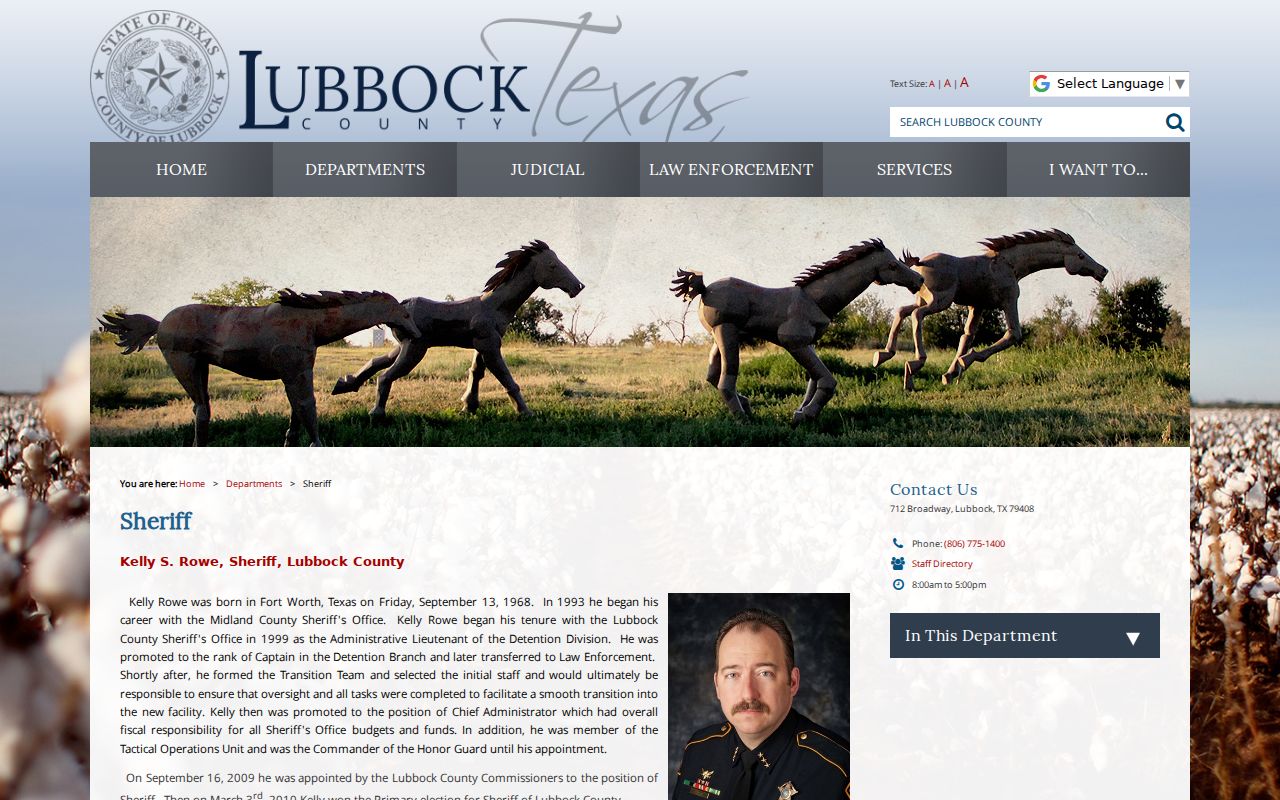
The Lubbock County Sheriff's Office routes public requests from its headquarters and manages detention records at the county jail.
Form LSO-1064 supports in-person, mail, and email receipt, though the form does not print a submission destination. Confirm it at 806-775-1400. The form can identify arrest reports, booking and intake files, jail logs, video, audio, call sheets, and other records. It also lets a requester seek an estimate before charges apply. A written estimate is required above $40 under the cited state cost rules.
Sheriff Administration
712 Broadway
Lubbock, TX 79401
806-775-1400
Monday through Friday, 8 a.m. to 5 p.m.
Detention Center
3502 N Holly
Lubbock, TX 79403
806-775-7009 or 806-775-7048
Booking and jail records
Lubbock County Jail Record Formats
The sheriff publishes the current detention roster in three official forms: an interactive view, a read-only PDF, and a downloadable Excel file. Each is reached through the real-time jail roster page. The interactive tool is useful for one person. The PDF gives a fixed, readable list. Excel can be sorted without copying the data from a commercial arrest site. The county warns that the roster is an operational snapshot and should be checked with jail staff when custody status is critical.
A new booking may not appear at once because intake, fingerprinting, charge entry, and magistration take time. If a person is not yet listed, call the Detention Center at 806-775-7009 or 806-775-7048. A roster allegation is not the prosecutor's final filed charge. For that outcome, move from the booking entry to the District Clerk or County Clerk case index. Deeper jail material, including a person's own jail card or another person's file, follows the sheriff's records process rather than the public roster alone.
Custody flow: Arresting agency › Lubbock County booking › Magistration › Prosecutor review › Clerk case file
Public Access Laws in Texas
The Texas Public Information Act governs nonexcepted records held by executive and local agencies, but not adjudicative court case files. Send a clear request to the body that holds the record. A ten-business-day Attorney General ruling deadline is not a promise that production itself will take ten days.
Key statutes and rules:
Government Code Chapter 552 gives access to nonexcepted government records and sets request procedures.
Government Code §411.135 permits DPS to release public conviction and deferred-adjudication CHRI.
Texas Rule of Judicial Administration 12 covers judicial administration, not filed adjudicative case documents.
Code of Criminal Procedure Chapter 55A sets current expunction rules.
Juvenile data, protected victim facts, medical records, active-investigation material, full financial identifiers, and records restricted by court order can be withheld or redacted.
Federal Records Beyond Lubbock County
A Texas DPS review does not replace a federal identity-history request. The FBI electronic Departmental Order portal lets a person request their own FBI Identity History Summary.
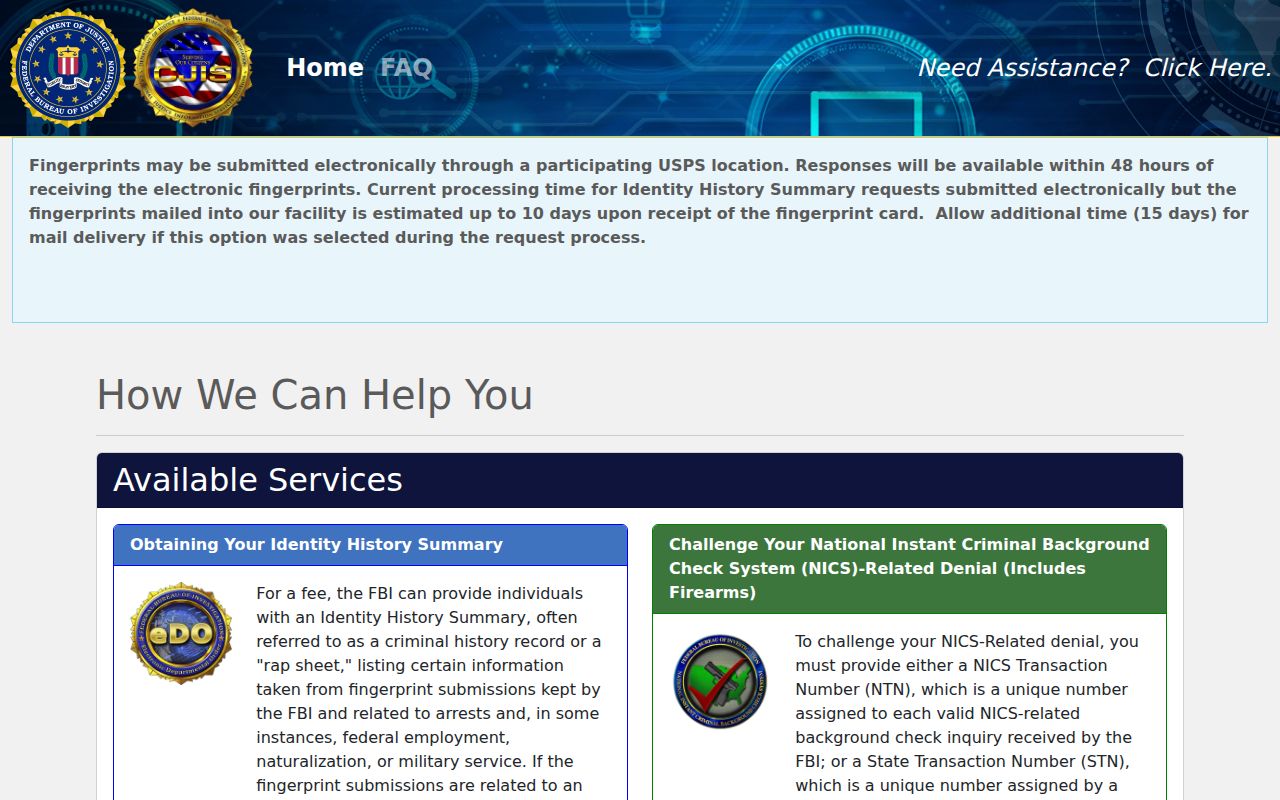
The FBI direct fee is $18. Fingerprints may go through a participating USPS location for an added fee, a mailed current card, or an approved channeler. Direct mail accepts the FBI credit-card form, certified check, or money order, but not cash or personal or business checks. The product is for the subject's own summary, not another person's record.
Lubbock County Warrant Record Checks
A warrant is a court order, not a booking or conviction. The issuing court keeps the judicial instrument, while the sheriff or police department tracks attempts to serve it. Arrest warrants, bench warrants, capiases, and capiases pro fine can sit in different court systems. A felony or Class A or B misdemeanor warrant may connect to the county clerks. Fine-only and city matters can remain with a Justice of the Peace or municipal court outside the main county index.
When resolving your own possible warrant, start with the court that may have issued it and confirm the current status with the serving agency. The Lubbock County Sheriff's Warrant Division can be reached through the county directory, and a focused Texas Public Information Act request may obtain a releasable sheriff record. Sealed warrants, unexecuted supporting affidavits, juvenile matters, and sensitive law-enforcement facts may be withheld. A missing web result is not proof that no process exists.
Sealed, Expunged, and Restricted Records
Texas now places expunction law in Code of Criminal Procedure Chapter 55A. Depending on the exact outcome, a route may exist after acquittal, pardon, no-bill, a qualifying no-charge or dismissal event, or successful qualifying diversion. Eligibility and waiting periods are fact-specific. A dismissal alone does not delete the arrest or booking record.
An order of nondisclosure has a different effect. It blocks ordinary public release for qualifying CHRI while keeping access for agencies authorized by statute. Lubbock County expunction filings go through the District Clerk at 904 Broadway, with current local form and fee questions directed to 806-775-1373. After relief, check both the local index and a fingerprint DPS review so any lag can be addressed with the reporting agency.
Lubbock County Supervision Records
Probation and parole are not the same office. Lubbock-Crosby County Community Supervision and Corrections Department manages county community supervision from 701 Main. The sentencing court file shows the supervision order and motions to revoke or adjudicate. State parole decisions belong to the Texas Board of Pardons and Paroles, while TDCJ's Parole Division supervises released people.
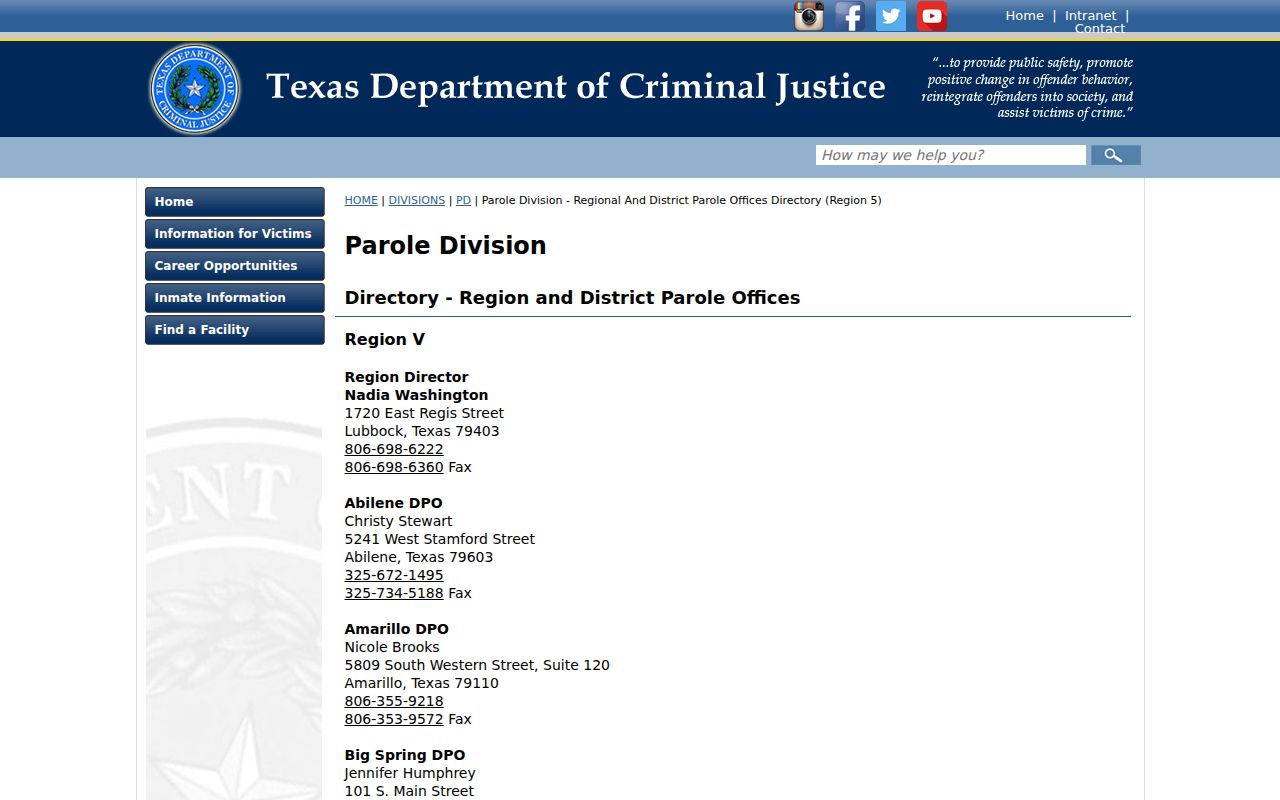
The TDCJ Region V directory lists the Lubbock District Parole Office at 1720 East Regis Street.
The public TDCJ Online Inmate Search covers state corrections, not current custody in the Lubbock County Detention Center.
Lubbock County Courthouse Record Shift
The official county gateway leads to the courts, sheriff, clerks, CSCD, directories, and forms that divide the local record system.

Felony records sit with the District Clerk in Room 105, while Class A and B misdemeanor records sit with the County Clerk in Room 207 at the same courthouse. Since January 1, 2026, new District Clerk filings are retained electronically. Paper filed by a self-represented person is stamped, scanned, and securely shredded. That change makes the electronic court file central, but it does not mean each image is available through a public web account.
The system has deep roots. Lubbock County organized in 1891, and its first jail also served as a church, school, and social center. Today's specialized custodians are a sharp contrast to that shared early building.
That division affects a practical search. Room 105 is the felony and District Clerk route, with the criminal desk at 806-775-1578 and archives at 806-775-1322. Room 207 is the County Clerk route for Class A and B misdemeanors, with the criminal desk at 806-775-1046 and copy service at 806-775-1048. Both sit at 904 Broadway, but they maintain separate case groups. A searcher who knows only a person's name should first identify the likely offense level and filing year. The clerk is a custodian, not a private investigator, so a case number makes a copy request far more precise.
Lubbock County Criminal Records by City
The county's three largest incorporated places use different city channels. Lubbock offers a police report viewer and municipal court service. Wolfforth puts its police, court, and city offices at one address and offers several citation-search modes. Slaton requires written police-report requests and has no online incident-copy search. City arrests that move to county detention and prosecution then appear in the county systems.
Municipal courts handle city ordinances, traffic matters, and other fine-only Class C cases. They do not replace the Lubbock County District Clerk or County Clerk for felony and higher misdemeanor files. Police reports likewise stay with the city department that created them, even after the person is booked at the county detention center.
Lubbock Criminal Records
273,071 residents · LPD reports and Municipal Court records
Wolfforth Criminal Records
8,746 residents · local police and citation search
Slaton Criminal Records
5,684 residents · written police requests and city court